short film
Name: glass
Author: OrbiteLambda
Year: 2025
movie description
1. Opening Sequence: The Adult Hand
The film begins with a dark screen that transitions to a kitchen sink with beige and white tiled walls. A pair of adult hands carefully fills a glass with water from a chrome faucet, stopping before it reaches the brim. This deliberate, measured action symbolizes maturity and control – the understanding of boundaries and the careful management of life’s resources. The hands are steady, showing experience and awareness of consequences. This opening sequence establishes the glass as a vessel of containment, both physical and metaphorical.
2. The Glass on the Table & Transformation
The glass is placed on a white table in a kitchen with green cabinets. As it sits there, the word “glass” appears in white text, then transforms into an animated sequence. The glass becomes a self-contained universe with geometric patterns in muted green tones, representing the mind’s internal world. Inside this glass-universe, two stylized black fish begin to swim, symbolizing possibilities, hopes, and the potential for meaning within a limited space.
3. The Young Fisherman: Hope and Illusion
A young fisherman appears, stepping into the glass as if it were a boat. He casts his line with enthusiasm, successfully catching both fish. This represents youth’s relationship with life – “fishing with closed eyes” as the text states. The young man believes in the system (the glass), sees abundance (two fish), and actively seeks meaning within the boundaries of his understanding. The text “Delusion Is Not A Lie. It Is The Shape Your Hope Takes When You Are Still Inside” reveals that this phase is about hopeful illusion – necessary for beginning the journey.
4. The Older Fisherman: Habit and Disillusionment
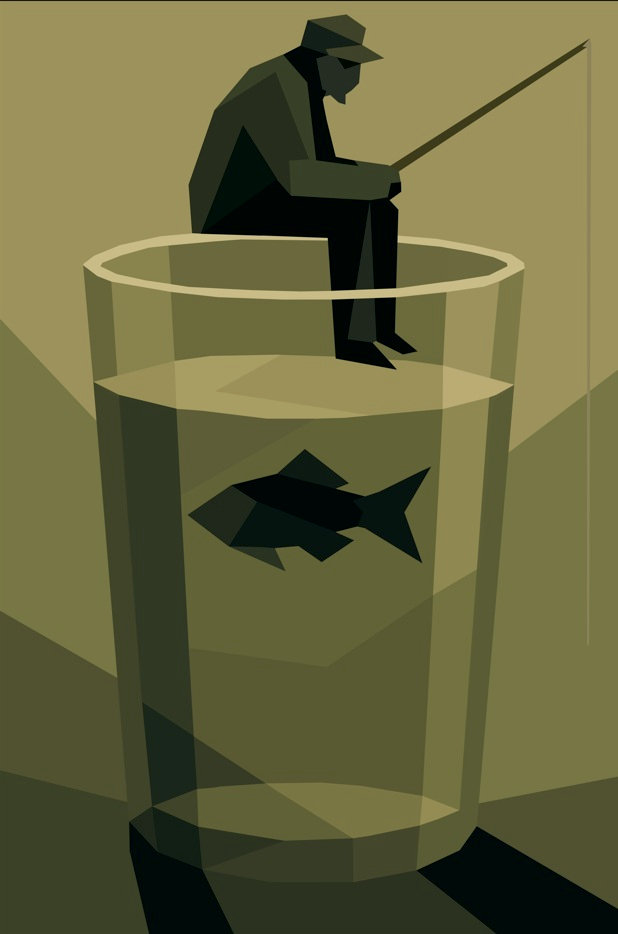
The same fisherman, now aged, returns. His posture is hunched, his movements slower. He casts his line, but now the rod extends beyond the glass’s boundaries. Only one fish remains inside. This symbolizes maturity where belief has faded but action continues out of habit. The text “Habit is not memory. It is the shape your absence takes when you no longer believe — but still act” explains this transition from purposeful action to mechanical routine. The fisherman no longer believes in the system, yet continues the ritual.
5. The Glass Falls: Crisis and Clarity
The glass falls from the table, spilling water but not breaking. This moment of “crisis” represents the shattering of illusions. The text “I thought clarity would come if I saw more. But clarity came when I saw nothing” reveals the paradox: true understanding comes not from accumulation but from emptiness. The unbroken glass symbolizes the persistence of structure even when content (meaning) has vanished.
6. The Child’s Hand: New Cycle
A child’s hand reappears, carelessly turning the faucet on full blast, overfilling the glass until water spills over the edges. The hand then removes the glass and turns off the water, leaving a mess. This represents new beginnings without the wisdom of experience – “fishing with closed eyes” once more. The cycle restarts, but with different qualities: the adult’s careful measure replaced by childish abandon, the glass filled to overflowing rather than to capacity.
7. The Single Fisherman: Life’s Journey
Crucially, it’s the same fisherman at different life stages – young, old, and implicitly, the child who will become the next iteration. This unity emphasizes that the journey is personal and continuous. The fisherman’s evolution from hopeful youth to habitual elder to the implied new beginning with the child’s hand shows the complete cycle of human engagement with meaning.
8. Philosophical Layers
- The Glass: Represents consciousness, life’s boundaries, and self-imposed limitations
- The Water: Symbolizes experience, time, and the substance of life
- The Fish: Represent meaning, purpose, and the objects of our pursuit
- The Rod: Stands for our methods of seeking meaning
- The Cycle: Demonstrates the eternal recurrence of hope, disillusionment, and renewal
9. AI Integration
The film blends hand-drawn animation with AI-generated elements. The creator uses AI as a collaborator rather than a shortcut, allowing for “testing ideas fast, playing boldly, and building small universes without a studio.” The glitches and imperfections in the animation become meaningful elements, as the creator notes: “sometimes a ‘glitch’ is the most honest part of the story.”
10. Final Message
The closing text “Youth is fishing with closed eyes. Maturity is fishing with open eyes. Truth is walking away — eyes clear, hands empty” encapsulates the film’s core message: true clarity comes not from catching fish (achieving goals), but from recognizing the empty glass and walking away with understanding.
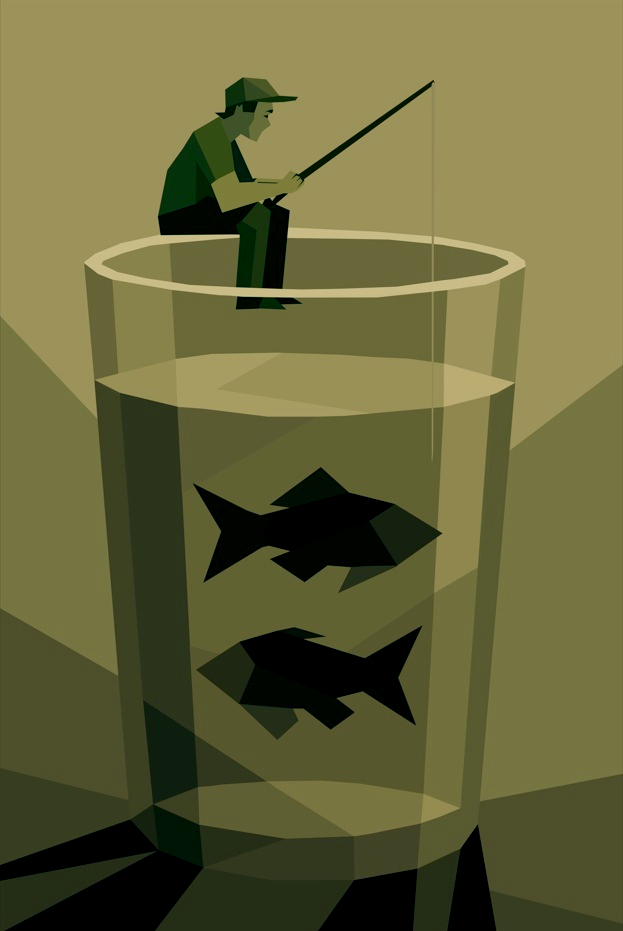
Delusion
The glass holds what you believe. Not what is.
Legend
Delusion is not a lie. It is the shape your hope takes when you are still inside the glass.
Process
Series: Glass
Name: Delusion
Author: OrbiteLambda
Year: 2025
Layers: 62
Resolution: 6667×10000
App: GIMP
Insight
Habit is the last thing to leave.
Legend
Habit is not memory. It is the shape your absence takes when you no longer believe — but still act.
Process
Series: Glass
Name: Insight
Author: OrbiteLambda
Year: 2025
Layers: 54
Resolution: 6667×10000
App: GIMP

Truth
When you stop looking, the glass becomes clear.
Legend
ou thought clarity would come from seeing more. It came from seeing nothing.
Process
Series: Glass
Name: Truth
Author: OrbiteLambda
Year: 2025
Layers: 30
Resolution: 6667×10000
App: GIMP
Description
Youth is fishing with closed eyes. Maturity is fishing with open eyes. Truth is walking away — eyes clear, hands empty.